We are living through a historical inflection point. It’s not hyperbole to say that the advancement of Artificial Intelligence (AI) is comparable to the Industrial Revolution or the dawn of the internet. Yet, the speed at which AI is evolving is unprecedented.
At Manishverse, we are fascinated by the intersection of humanity and technology. Today, we are diving deep into the current state of AI advancement and, crucially, what this seismic shift means for our society, our jobs, and our ethics.
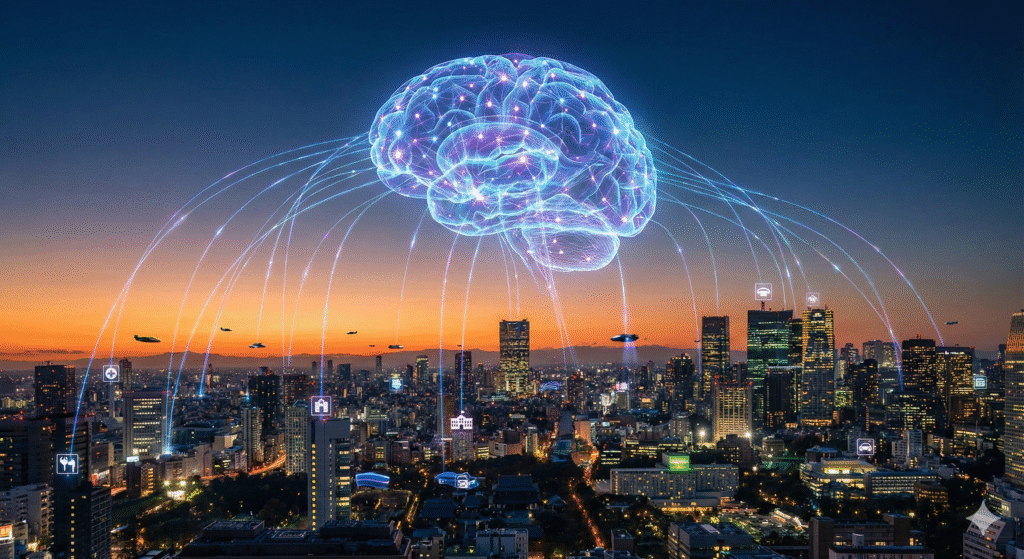
The Velocity of Advancement: Beyond Science Fiction
Until recently, AI was largely hidden behind the scenes—optimizing our Google searches, recommending Netflix movies, or filtering our spam folders.
Then came the wave of Generative AI. Suddenly, tools like ChatGPT, Midjourney, and Claude brought the power of creation to the masses. We aren’t just analyzing data anymore; we are generating novel text, hyper-realistic images, code, and music with simple prompts.
But the advancement goes beyond creative tools. In healthcare, AI algorithms are detecting diseases earlier than human doctors. In science, AI is folding proteins and accelerating material discovery. The capabilities of these systems are doubling at a rate that outpaces Moore’s Law, bringing us closer to systems with human-level cognitive abilities across a broad range of tasks.
The Societal Shake-Up: Redefining the Workforce
The most pressing conversation surrounding AI is its economic impact. The fear is palpable: Will a robot take my job?
The honest answer is nuanced. The advancement of AI will undoubtedly disrupt the workforce. Roles heavily reliant on repetitive data processing, basic coding, or routine content creation are highly vulnerable to automation.
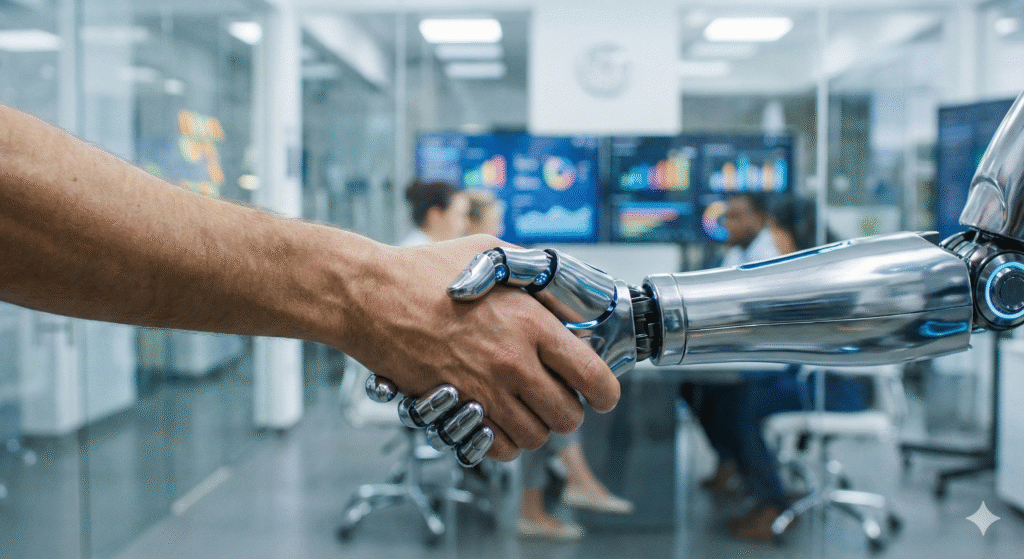
However, history shows us that technology rarely just subtastes jobs; it transforms them. We are entering an era of human-AI collaboration.
- The Shift: The demand will shift away from rote tasks toward uniquely human skills: complex critical thinking, deep emotional intelligence, strategic leadership, and sophisticated physical trade skills.
- New Opportunities: We are already seeing the rise of entirely new job categories, such as “Prompt Engineers,” AI ethicists, and AI system auditors.
The challenge for society isn’t stopping the technology; it’s managing the transition through rapid upskilling and education reform.
The Ethical Frontier: With Great Power Comes Great Responsibility
As AI systems become more integrated into daily life—deciding who gets a loan, who gets interviewed for a job, or even assisting in judicial sentencing—the ethical implications become profound.
If we are not careful, the advancement of AI could amplify existing societal biases. AI models are trained on human data, and human data is often historically prejudiced. We must demand transparency in how these models are built and rigorously test them for fairness.
Furthermore, we face the challenge of truth in the digital age. As deepfakes become indistinguishable from reality, our society faces a crisis of trust. Developing methods to verify authentic content will be as crucial as developing the AI models themselves.
Conclusion: Steering the Ship
The advancement of AI is not something happening to us; it is something created by us. We have agency in this process.
The future isn’t a predestined dystopian nightmare or a utopian dream. It will be determined by the choices we make today regarding regulation, education, and ethical deployment.
At Manishverse, we believe the goal shouldn’t just be to build more powerful AI. The goal should be to build AI that augments human potential, solves our greatest challenges, and aligns with human values. The technology is ready for the leap; society must now ensure we land on our feet.
What are your thoughts on the speed of AI development? Are you excited about the future of human-AI collaboration, or concerned about the societal impacts? Share your views in the comments below!